Why the odometer isn't the only thing worth checking before you call a car "new"
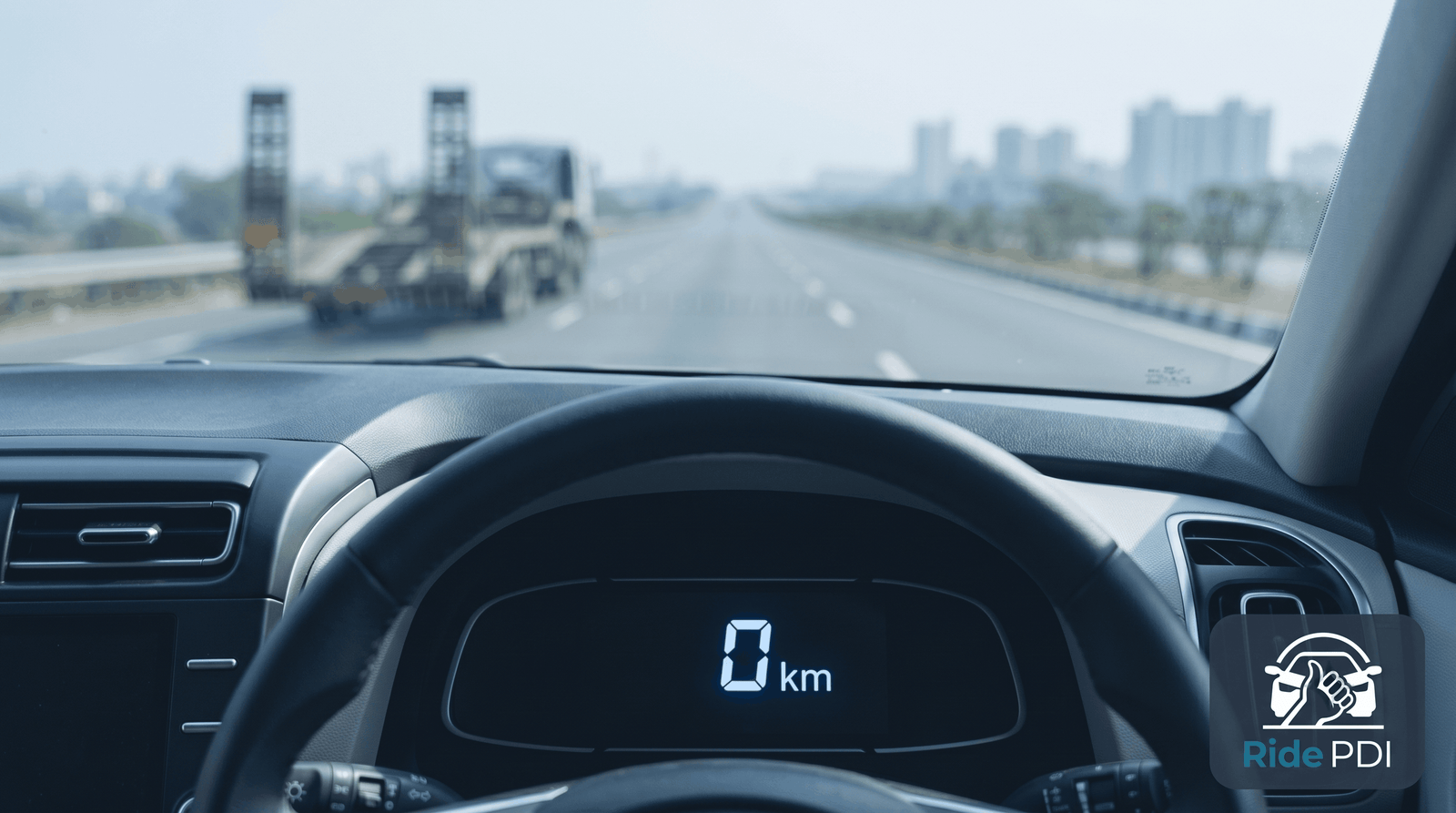
There's a number every buyer looks for on delivery day: 0 km. It's printed on the sticker, it flashes on the dashboard, and it's treated as proof — the car has never turned a wheel outside the factory and the dealership yard. Case closed.
Except the odometer is a digital reading, and digital readings can be reset. That's not a conspiracy theory, it's just how the instrument cluster works. Which raises a more interesting question than "what does the odometer say" — and that's "what does the car say?"
Why This Even Happens
High-traffic showroom belts — the kind where multiple dealerships sit within a few hundred metres of each other and footfall is constant — deal with test-drive demand most single-location showrooms never see. Zirakpur's stretch along NH-7 is a good example: it's become one of the busiest car-shopping corridors in the Tricity, with buyers from Chandigarh, Mohali, and Panchkula all funnelling through the same handful of showrooms on weekends.
That volume creates pressure. When a popular variant is in short supply, it's not unheard of for a showroom to quietly let a serious buyer take an extended "VIP" drive in the actual unit that's about to be sold — not the designated demo car, but fresh inventory — before resetting the trip meter and putting it back on the floor as untouched stock. It's rarely reported, almost never provable through the dashboard alone, and it's exactly the kind of thing a buyer has no way of knowing unless they know where else to look.
The Odometer Isn't the Only Witness
Here's the more useful way to think about it: a car's mileage isn't just a number, it's a pattern of physical wear. And wear patterns are much harder to erase than a digital counter.
The pedals. New car pedal pads have a distinct texture — sharp rubber ridges, uniform colour, no shine. Even 200–300 km of real driving starts to polish the high-contact points on the accelerator and brake pad, especially at the edges where a foot naturally rests. A slight sheen, a faint discolouration, or rounded rubber ridges on a car that supposedly has zero kilometres is worth a second look.
Interior plastics. Multiple people getting in and out of a car — reaching for the door handle, resting an arm on the centre console, gripping the gear shifter, adjusting the steering wheel — leaves behind micro-scratches and faint polishing on high-touch plastic surfaces. On a genuinely untouched car, these areas still have the slightly matte, unblemished finish they left the factory with. A gear knob with visible shine, or a steering wheel rim that's noticeably smoother than the rest of the dash, tells a different story than the trip meter does.
Tyres. This is the hardest one to fake. Tyres develop tread wear patterns based on how a car is actually driven — cornering habits, braking style, road surface. A car with "zero" kilometres should have tyres with sharp, uniform tread edges and manufacturing sheen still visible in the grooves. Rounded tread edges, uneven wear across the tyre width, or visible brake dust built up on the rims are signs of real road use, regardless of what the dashboard claims.
Seatbelt and key wear. Small details — a seatbelt buckle that clicks with a slightly worn spring action, or a key fob button that's lost its factory crispness — are easy to overlook and hard to stage.
None of these signs are dramatic on their own. That's the point. A car that's been quietly used for a handful of "VIP" test drives isn't going to look damaged — it's going to look almost new, with just enough physical footprint left behind for someone who knows what to check.
Reading the Car, Not Just the Dashboard
The bigger shift here is a mental one: stop treating the odometer as the final word and start treating it as one data point among several. A trustworthy "zero km" car should show consistency — a dashboard reading of zero and pedals, plastics, and tyres that back it up. When those two stories don't match, that gap is exactly what you want to know about before you sign, not after.
This is, honestly, the harder part of buying a car in a fast-moving market like Zirakpur, Mohali, or Chandigarh — you're not just comparing variants and prices, you're trying to verify a claim that the dealership itself has no real incentive to help you scrutinise too closely.
If you'd rather have a trained eye do that physical read for you — checking pedal wear, panel condition, tyre tread depth, and everything else that doesn't show up on a sticker — that's exactly the kind of independent, on-site inspection RidePDI runs for buyers across Zirakpur and the wider Tricity before delivery day, not after.
Book Pre-Delivery Inspection
Inspect Before You Accept - Get a comprehensive 280+ point inspection of your new car before taking delivery.