Why the safety feature everyone's selling you might not actually be switched on
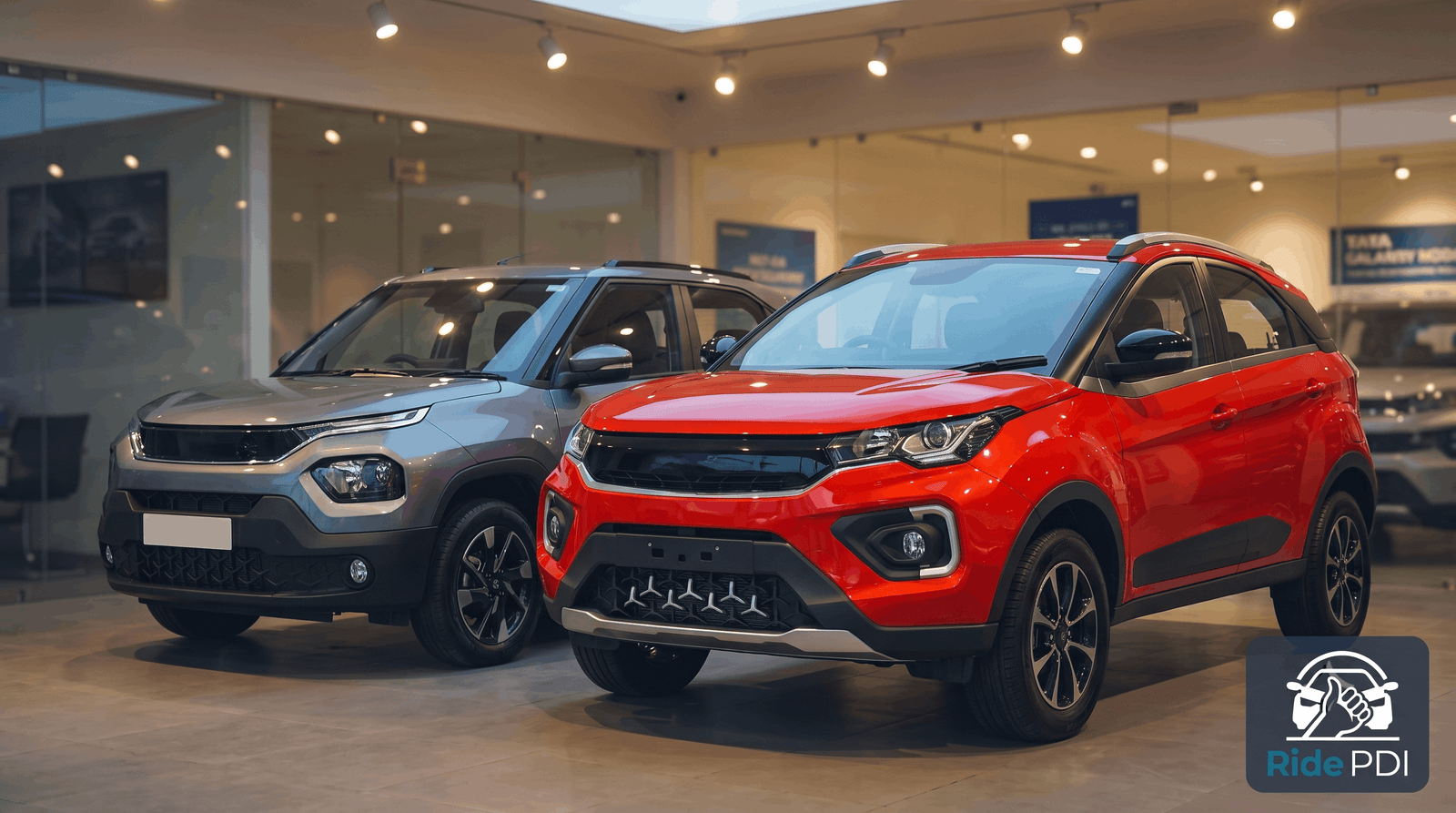
This July has been one of the busiest months on the Indian new-car calendar in years — and almost every headline launch is leading with the same word: ADAS. The Nissan Tekton arrived on July 9 with its top-spec Tekna trim built around a full advanced driver-assistance suite — autonomous emergency braking, lane-keep assist, blind-spot monitoring, traffic sign recognition. The Maruti Suzuki Brezza facelift, landing later this month, is bringing Level 2 ADAS to the country's best-selling compact SUV segment for the first time. Add the Skoda Kodiaq RS with its nine-airbag, Level 2 ADAS package, the updated Toyota Hilux with its own driver-assist suite, and MG's new three-row PHEV, and it's clear where the industry's selling point has shifted — from horsepower and mileage to sensors and software.
It's a genuinely good shift. Radar-based cruise control, automatic braking, and lane-keep systems save lives when they work. The catch is in that last part: when they work.
What "ADAS" Actually Is, Mechanically
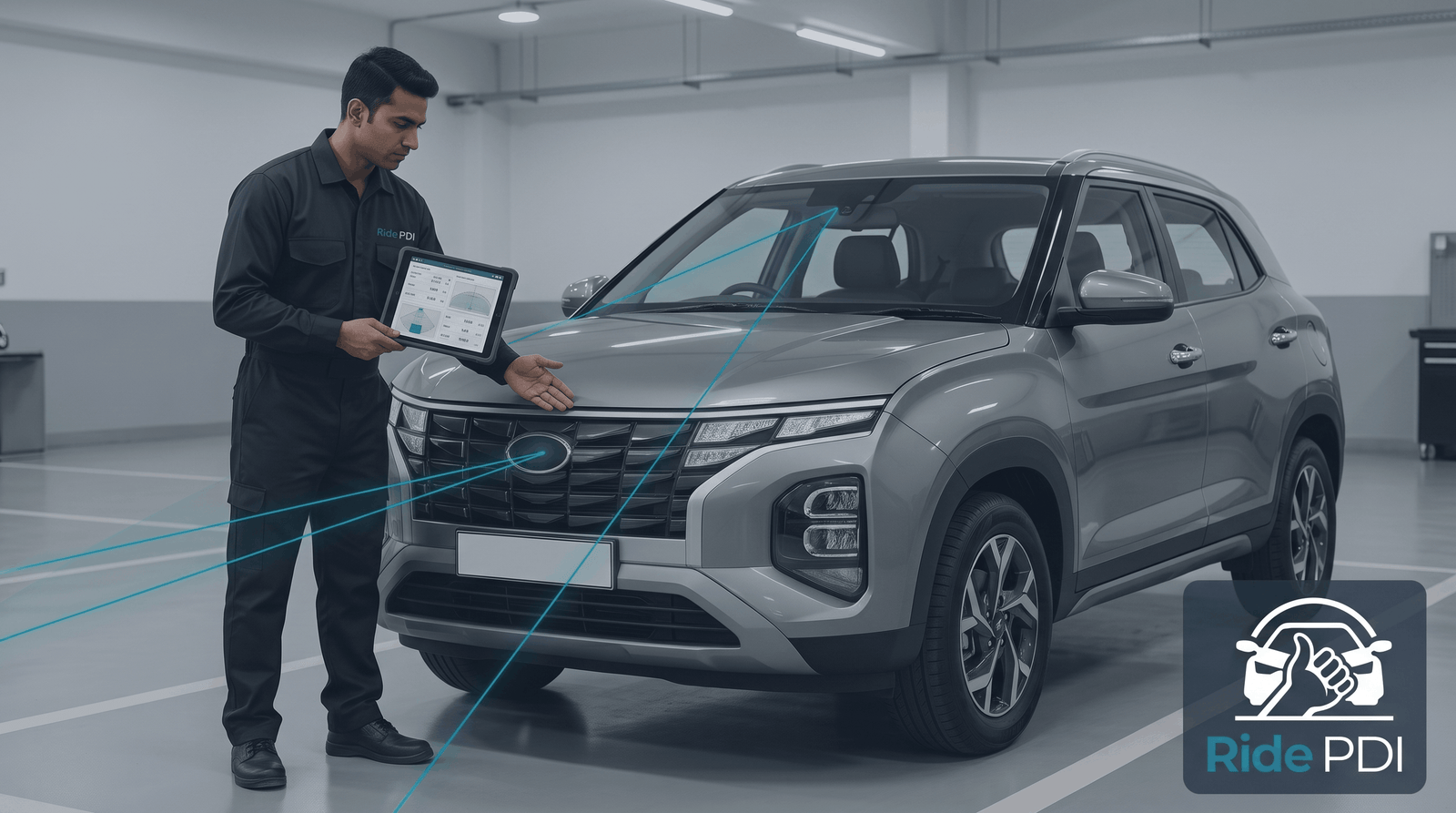
Strip away the marketing language and ADAS is a network of physical hardware bolted to your car — a radar module usually sitting behind the front grille or bumper, a forward-facing camera mounted near the rearview mirror, and a cluster of ultrasonic sensors around the body. Every one of these components has to be aligned to a precise angle and calibrated against the vehicle's exact geometry to work correctly. A camera that's off by even a degree or two can misjudge lane markings. A radar module nudged out of alignment during handling can miscalculate the distance to the car ahead — either braking when it shouldn't, or worse, not braking when it should.
This isn't a "nice to have if it's slightly off" system. It's binary. Either the calibration is correct and the system behaves the way the brochure promises, or it isn't — and you have an expensive sensor suite quietly doing nothing, or doing the wrong thing, while you assume it has your back.
The Assumption Nobody Questions
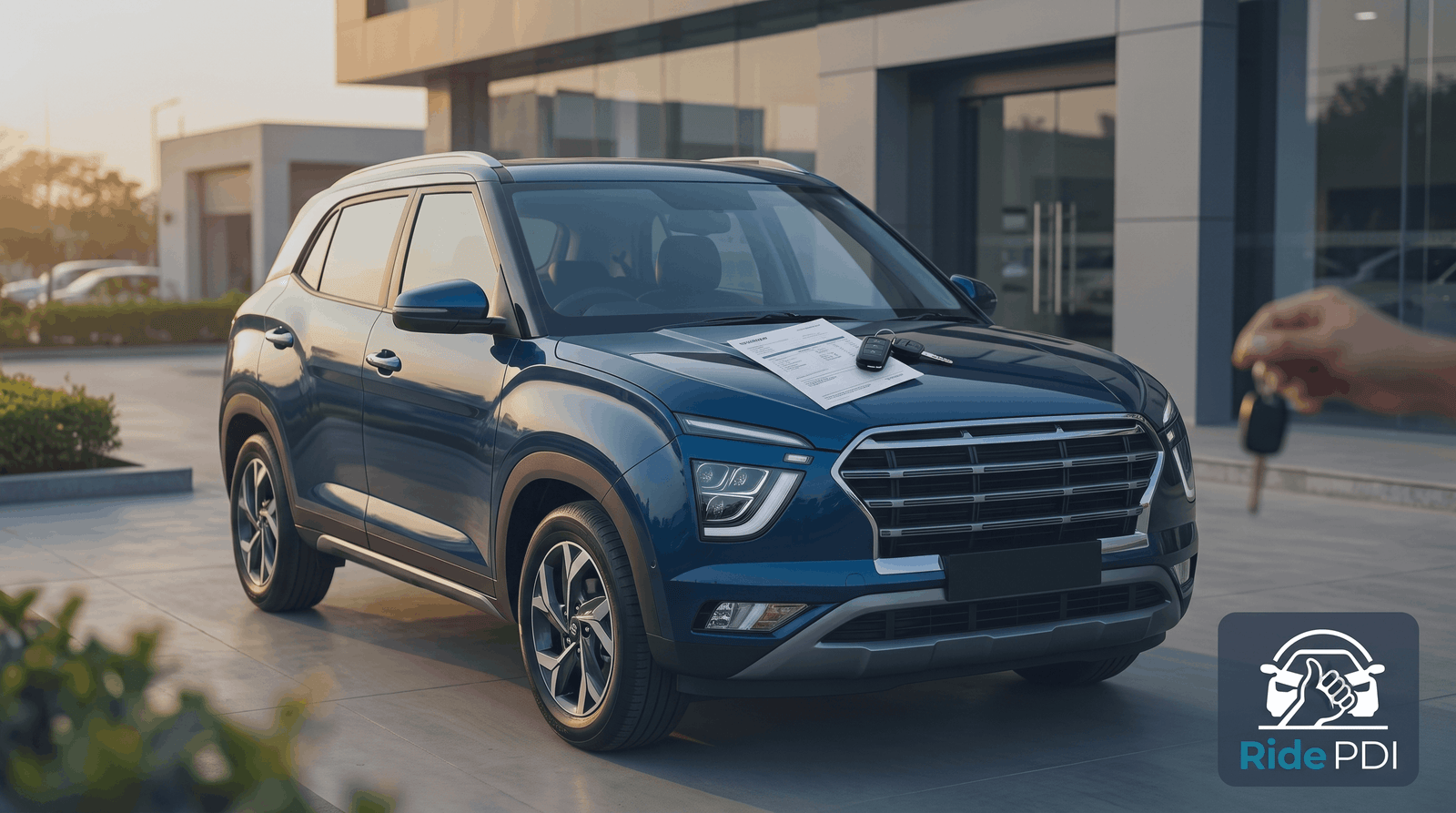
Here's the illusion at the heart of it: buyers assume that because a car left the factory with calibrated sensors, it arrives at the local stockyard the same way. It doesn't always.
Between the assembly line and your driveway, a car travels on a multi-level car carrier, gets loaded and unloaded at transit hubs, sits in an open stockyard for days or weeks, and gets shuffled around a dealership lot by multiple people before it ever reaches you. None of that is dramatic — there's rarely a visible dent or a cracked bumper to point to. But radar and camera calibration is sensitive enough that a firm tie-down, a minor bump during loading, or even a windshield replacement at a pre-delivery stage can throw it off by just enough to matter, without leaving a single visible mark.
The dealer's standard pre-delivery process is built around a walk-around: paint, tyres, fluid levels, a test start. It was never designed to verify whether a radar module is reading distances correctly. Most showroom staff don't have the diagnostic tools to check it, and honestly, most buyers don't think to ask.
The Financial Risk Nobody Mentions
This is where it stops being a technical curiosity and becomes a money problem. ADAS recalibration isn't something you can eyeball or self-diagnose — it requires dealer-level diagnostic equipment, and in many cases, a controlled static calibration bay with target boards, or a dynamic calibration drive on a specific type of road. If you drive away, discover an ADAS fault weeks later, and the dealer determines it happened after delivery — a minor scrape, a windshield chip, even a wheel alignment done at an outside garage — that recalibration bill lands squarely on you. Depending on the brand and how many modules need reflashing, that's not a small figure.
And here's the part that should genuinely bother buyers in Chandigarh, Mohali, Zirakpur and Panchkula picking up one of this month's new launches: if that misalignment existed before delivery — which is entirely possible given how these cars are transported and stored — you have no way to prove it, because nobody checked and documented the calibration status before you signed.
So — Are You Willing to Gamble on Delivery Day?
That's the honest question worth putting to anyone picking up a new Tekton Tekna, a Brezza with Level 2 ADAS, or any of the other ADAS-equipped launches hitting Tricity showrooms this month: are you comfortable taking delivery of a car whose most heavily marketed safety feature has never actually been verified to work?
For most buyers, the answer — once it's framed that plainly — is no. Nobody wants to find out their lane-keep assist doesn't engage, or their automatic braking doesn't trigger, the first time they actually need it.
What an Independent, Tech-Focused Inspection Actually Checks
This is exactly why a pre-delivery inspection needs to go beyond paint and upholstery in 2026. A proper tech-focused PDI plugs directly into the vehicle's diagnostic port to read the ADAS control module for stored fault codes, verifies there are no active calibration warnings, and checks the physical mounting and alignment of the radar and camera housings — the same checks a dealer's own workshop would run, done independently, before you accept the car and before the leverage to demand a fix disappears.
If everything's in order, you drive away with documented proof your safety systems are actually live. If something's off, you catch it while it's still the dealer's problem to fix — not an out-of-pocket recalibration bill three months down the line.
The ADAS badge on the window sticker is only worth what's actually calibrated underneath it. This July, with more ADAS-equipped launches hitting the Tricity than ever before, that's worth checking before you sign — not after.
Book Pre-Delivery Inspection
Inspect Before You Accept - Get a comprehensive 280+ point inspection of your new car before taking delivery.